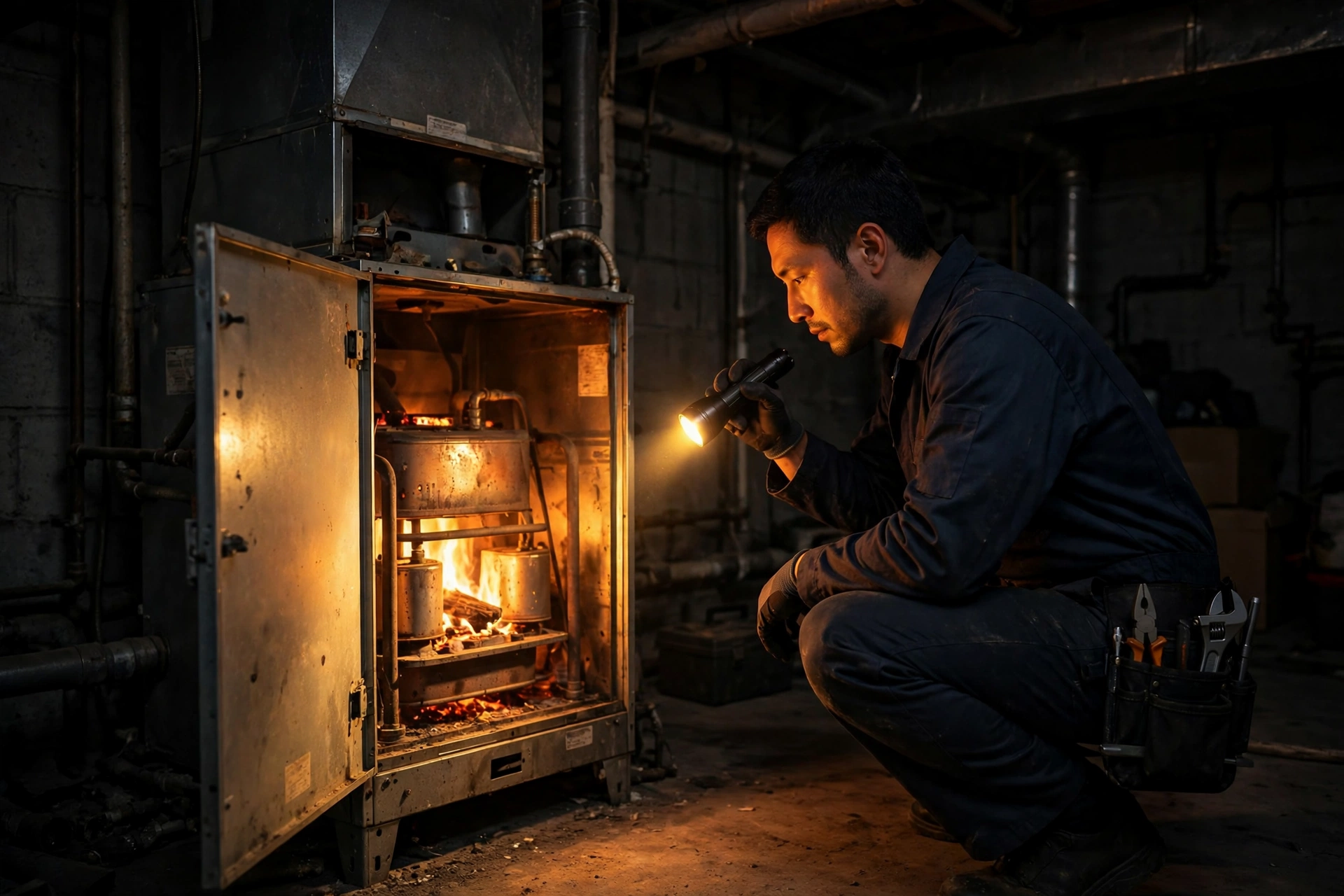
A dead furnace at midnight in January is not a problem that waits for business hours. Emergency diagnosis and repair for Manassas homes, around the clock.
When your furnace stops on a cold Manassas night, Manassas Furnace Pros provides prompt emergency furnace repair across Prince William County. We check the igniter, flame sensor, gas valve, and limit switch, explain what failed in plain language, and restore safe heat whenever the system can be repaired. For urgent no heat help at home, call (703) 962-7410 and speak with our local team today for clear next steps.
A furnace failure rarely waits for a convenient hour, and a Northern Virginia cold snap can turn a quiet evening in Manassas into a stressful night. Bedrooms cool quickly, pipes in exterior walls face added strain, and families start layering blankets while wondering what went wrong. Our emergency visit starts with listening to what you noticed, whether that was a burning smell, repeated clicking, a blower that ran cold, or complete silence at the thermostat. That history helps narrow the fault before tools come out. Homes around Manassas, from Wellington to neighborhoods near the historic downtown, cool at different rates depending on insulation, window age, and how exposed the house is to wind. Knowing that pattern helps us prioritize checks and advise you honestly about how quickly the home needs heat restored tonight.
Once on site, we work through the heating sequence in order, from the thermostat call through the inducer motor, ignition, flame proof, and blower delivery. A failed hot surface igniter, a dirty flame sensor, or a tripped limit switch can each stop heat at a different point in that sequence. We show you the failed component, explain the repair, and confirm safe operation before the visit ends. We also record the fault code shown by the control board before clearing it, since that code narrows the search and protects against repeat failures later the same week. After the repair, registers throughout the home are checked by hand so a warm reading at one vent does not hide a delivery problem elsewhere.
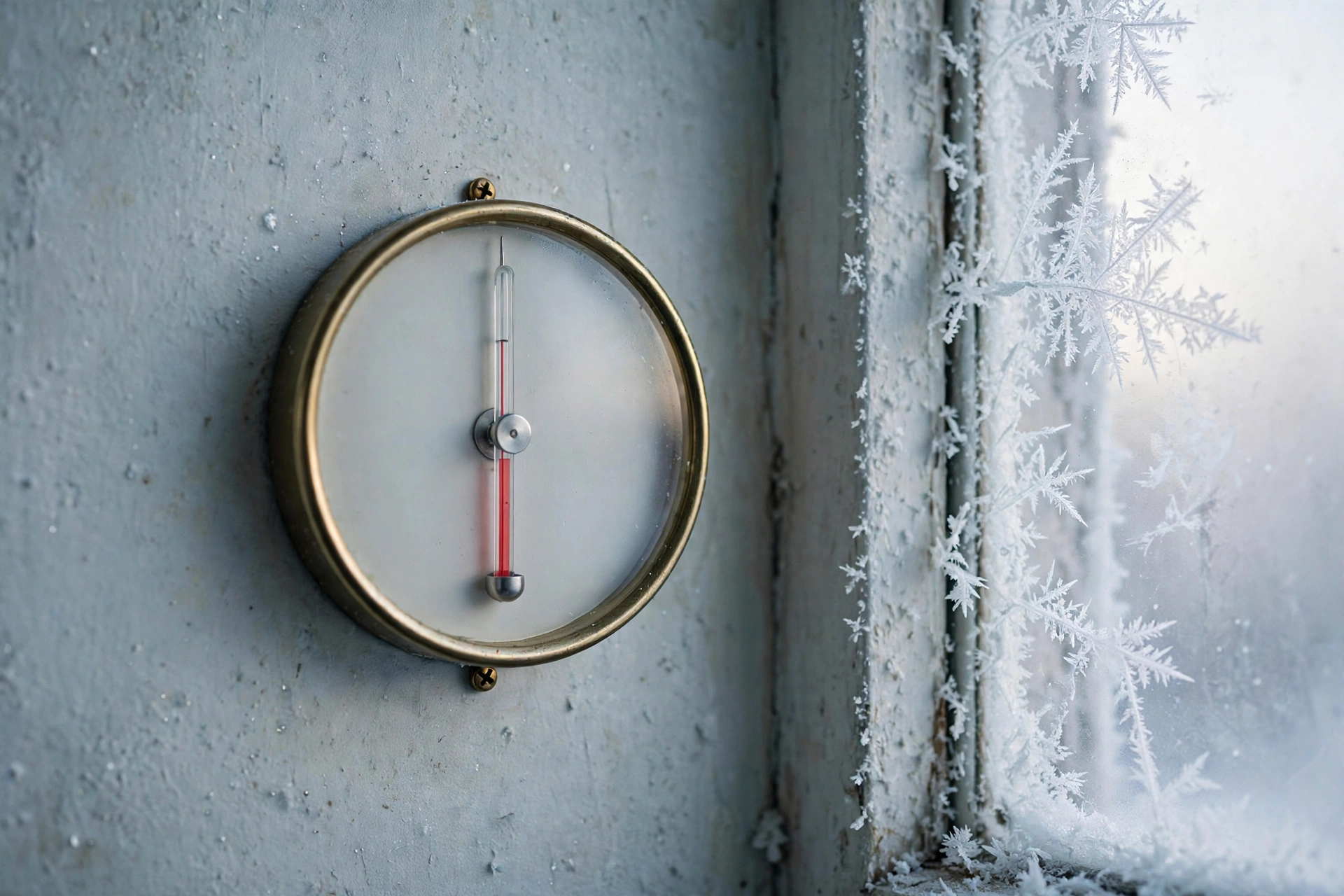
Many emergency calls in Prince William County trace back to a small part that has worn out after seasons of daily cycling. Hot surface igniters grow brittle and crack, flame sensors build up coating that blocks the flame signal, and run capacitors weaken until the blower motor struggles to start. Gas valves can stick, inducer motors can seize, and condensate traps on high efficiency models can clog and shut the system down. Repeated cycling wears igniters and sensors faster than steady running, especially in homes where the furnace is slightly oversized for the ductwork. During the visit we note cycle length and temperature rise, because those two details often explain why a part failed now rather than lasting through the whole season in Prince William County.
Other no heat calls start outside the furnace cabinet itself. A clogged filter can starve airflow and trip the limit switch, a blocked flue can stop the inducer from proving draft, and a thermostat fault can prevent the call for heat entirely. We check the full chain rather than assuming the largest part failed, which keeps the repair focused on the actual cause of the shutdown. Neighborhoods with finished basements, additions, or converted garages sometimes place unusual demand on an older furnace that was sized for the original house only. When we see that layout, we check whether airflow reaches those added spaces and mention it plainly, since an emergency repair is a good moment to understand the whole system picture.
Safety checks come first on every emergency visit, especially when a gas furnace has been short cycling, producing unusual odors, or shutting down repeatedly. We inspect the heat exchanger area, verify proper venting, test for correct flame appearance, and confirm that safety controls like the limit switch and rollout switches are doing their jobs. If a repair cannot be completed safely, we explain why, secure the system, and talk through the next step honestly rather than forcing a temporary fix. If a gas smell, a carbon monoxide alarm, or visible damage is part of the picture, the visit slows down and safety steps come before any repair discussion. We ventilate where appropriate, keep the system off, and explain exactly what must happen before heating can resume safely in the home for your family.
When a safe repair path is clear, we replace only the failed component, whether that is an igniter, a flame sensor, a gas valve, or a blower part, and then run the furnace through several full heating cycles. We watch ignition, listen to the inducer motor, measure temperature rise, and confirm warm air reaches the registers. Before leaving, we explain what failed, what to watch for, and simple steps like filter changes that help the repaired system keep running through the rest of winter. Homeowners also receive simple guidance for the hours after the visit, including what a normal cycle should sound like and which change would justify another call. That clarity matters at midnight, when every unfamiliar click can feel like the start of another breakdown and another cold night without reliable heat at home.
Nighttime failures feel more common because that is when furnaces work hardest. Temperatures in Manassas often fall sharply after sunset in January and February, so the system runs longer cycles and weak parts are pushed past their limit. An igniter that worked during a mild afternoon may fail during the third long cycle of a cold night. Colder air settles into lower floors first, which is why a furnace that fails during a long overnight cycle can leave bedrooms upstairs tolerable and the main floor uncomfortably cold by morning. Checking temperatures room by room helps confirm whether delivery, not only ignition, contributed.
Long run times also expose airflow and control problems. A dirty filter, a tired blower motor, or a thermostat set far above the room temperature keeps the furnace running without rest. Safety controls respond by shutting the burner down, which protects the heat exchanger but leaves the house cooling until the cause is found and corrected properly. Keeping the thermostat set at a reasonable temperature during very cold weather also reduces strain, since extreme setbacks force long recovery cycles. A steady setting suits most Manassas homes better than deep overnight drops followed by a hard morning push from a cold start.
If heat stops overnight, check that the thermostat is set to heat, confirm the furnace switch is on, and look at the filter. Avoid restarting the system again and again, since repeated resets can mask the fault code. Note any sounds or smells, then call (703) 962-7410 so the failure pattern is fresh when help arrives. Writing down the time the heat stopped and any code flashing on the board gives the technician a head start. Small details like a recent filter change, a power flicker, or work done on the home recently can redirect the diagnosis toward the real cause much faster.
Call promptly when the house has no heat at all, when you smell gas, when the furnace makes loud banging or grinding sounds, or when the system starts and stops every few minutes. These signs point to faults that rarely correct themselves, and waiting through a freezing night adds risk to pipes, pets, and anyone in the home who is sensitive to cold. Renters and homeowners alike should know where the furnace switch and breaker are before an emergency happens on a freezing night. Finding those locations calmly during the day beats searching a dark utility room while the house cools and everyone in the family waits for answers about the heat.
Also call when the blower runs but only cold air comes from the vents, when the thermostat screen is blank, or when you see water pooling around a high efficiency furnace. A clogged condensate trap, a failed igniter, or a control fault can all present this way. Early diagnosis often keeps a single failed part from stressing the rest of the system. Waiting also carries a hidden cost, because a furnace struggling against a failing part often damages related components. A blower forced to run against overheating, or an igniter cycled dozens of times, ages quickly.
A brief delay may be reasonable when heat still works and only one minor symptom appears, like a slightly longer ignition. Even then, write down what you noticed and book a visit soon. Small warnings in Manassas winters tend to grow into full breakdowns once colder weather settles in across Prince William County. If young children, older relatives, or medical needs are part of your household, say so when you call, because that context shapes how urgently we treat the visit. Keeping a few rooms closed and using safe supplemental warmth carefully can help while you wait for the repair to begin.
Most no heat nights start as one of these six presentations. Each guide covers causes, safe checks, and the repair.
The blower runs and the vents answer, but the air never warms up. Causes, safe checks, and the fix.
You call for heat and nothing happens at all. The checkpoints a silent furnace fails, in order.
Bangs, squeals, rattles, and scrapes, each translated to the part that makes it and what to do.
Fires up, shuts down, fires again, while the house never warms. Why it happens and why it wears parts out.
From harmless first run dust to overheated wiring: which burning smells are normal and which mean stop.
Modern furnaces make water every cycle. Where it should drain, why it pools instead, and how we stop it.
What Manassas homeowners ask when the heat is already out.
Describe what your furnace is doing and we will point you to the right next step.
Call (703) 962-7410Check that the thermostat is set to heat and raised above room temperature, confirm the furnace power switch is on, and look at the air filter. If the system still will not start, or you smell gas, stop troubleshooting and call for help right away.
Many common failures can be repaired in one visit when the fault is a part like an igniter, flame sensor, or capacitor. If a larger component has failed, we explain the findings, secure the system safely, and outline the next step clearly before any further work begins.
A limit switch trips when the furnace gets too hot inside, often because airflow is restricted by a dirty filter, blocked vents, or a weakening blower. Repeated trips are a warning sign, not a nuisance, and the airflow cause needs to be found and corrected promptly.
Repeated resets are not a good idea, because the furnace is shutting down for a reason and the fault code can be lost with each attempt. Note the pattern, leave the system off if symptoms continue, and have the ignition and safety controls tested properly.
A complete loss of heat during cold weather counts, as do gas smells, loud mechanical noises, water around the furnace, and rapid short cycling. In a Manassas winter, indoor temperatures can fall quickly, so these problems deserve same day attention rather than waiting until morning.
Ignition, burner, and gas control problems found by sequence testing and fixed.
Heat strips, sequencers, and air handler faults diagnosed and repaired.
A full seasonal tune-up that keeps heat steady and catches wear early.
New furnaces sized to the house and installed with sealed, tested duct connections.
Do not wait for morning. Call (703) 962-7410 and a technician gets routed to your Manassas home.
Call (703) 962-7410