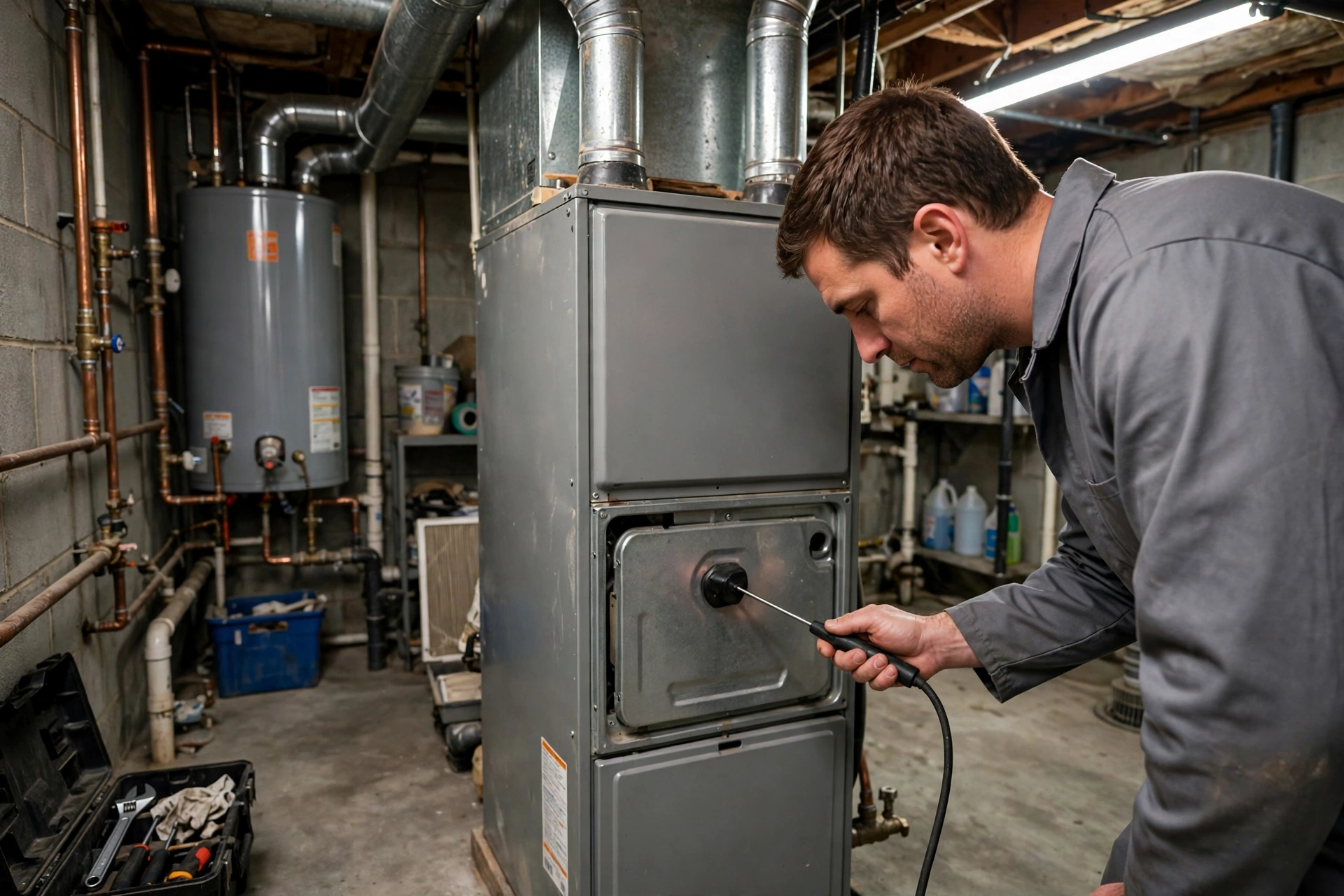
A healthy furnace has a predictable soundtrack: a soft inducer whir, a gentle whoosh of burners, a steady blower hum. New sounds break that pattern, and each one points at a specific part of the cycle.
A furnace making noise in Manassas is usually reporting a mechanical problem in the part you hear loudest. Bangs point to delayed ignition or expanding duct metal, squeals to blower bearings, rattles to loose panels and hardware, and scraping to a blower wheel out of position. Note when in the cycle the sound happens, and call (703) 962-7410 if it is loud, sudden, or getting worse, because furnace noises rarely improve on their own.
Noises at startup carry the most serious meanings. A bang or soft boom in the first seconds of a cycle usually means delayed ignition: gas builds a moment too long before the burners catch, often because the burners are dirty or the igniter is weakening. The little explosion that follows stresses the heat exchanger every time it happens. Gentler pops and ticks as the system warms or cools are usually duct metal expanding and contracting, which is normal in mild form and worth attention only when it grows loud.
Sounds during the run belong mostly to moving air and the parts that move it. A high pitched squeal that rises with blower speed points to worn motor bearings, or a slipping belt on older belt drive units. A deep hum with no airflow suggests a blower motor that wants to turn but cannot, a classic failed capacitor pattern. Rattles often trace to loose panel screws, a vibrating duct damper, or a filter frame chattering in its slot, and a steady vibration can travel surprisingly far through ductwork before it reaches your ears.
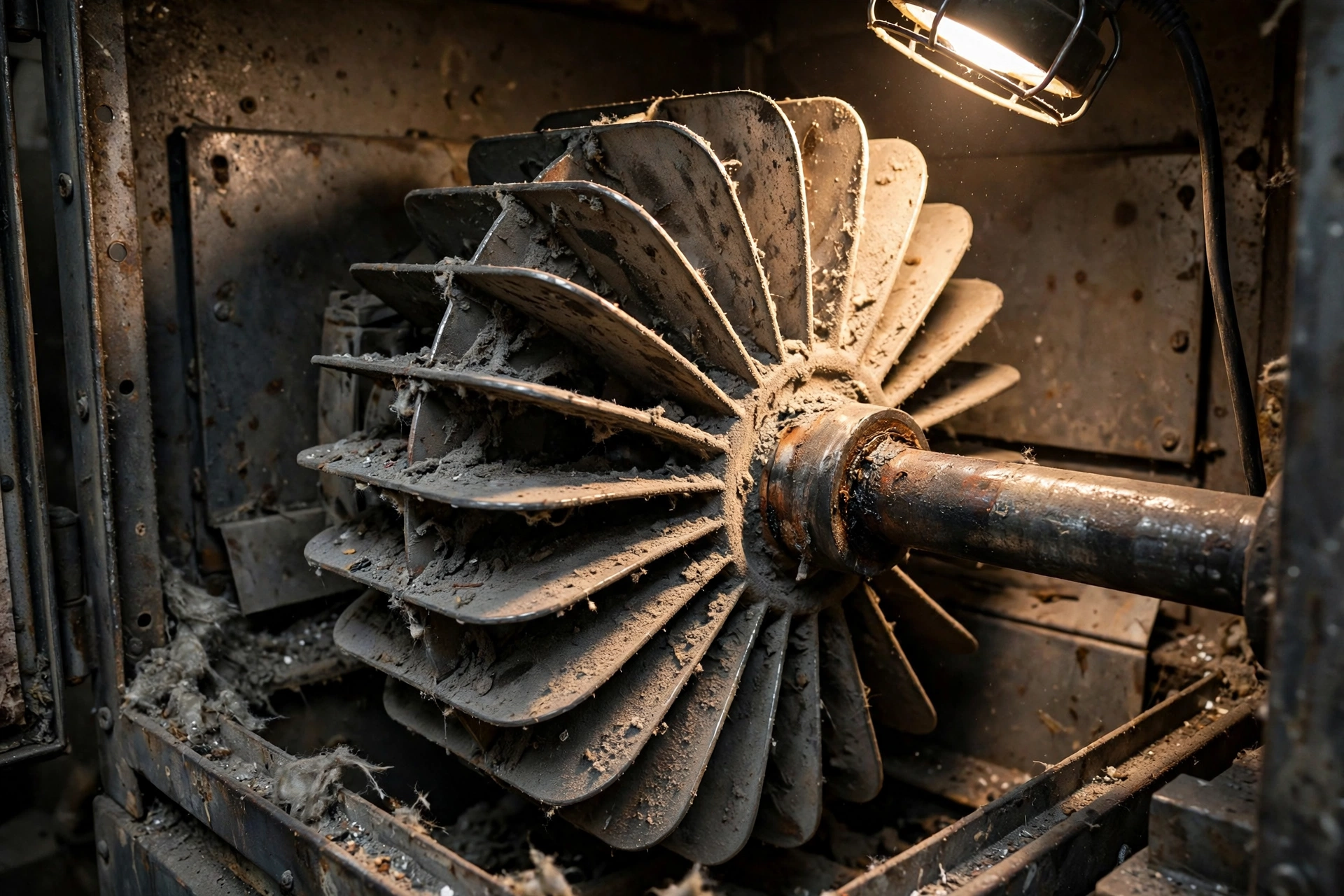
Scraping and grinding sit in their own category: stop and call. A blower wheel that has loosened on its shaft, cracked fins, or debris inside the housing can tear the assembly apart while it runs. These sounds tend to start suddenly, get worse across a single evening, and end in a blower that moves no air at all. Shutting the system down at the first scrape protects the motor and the housing from damage that a timely repair would have avoided.
You cannot fix most furnace noises from outside the cabinet, but you can hand the technician a much shorter search by observing a few things carefully first.
Three sounds end the checks immediately: a loud boom at startup, metal scraping or grinding, and any new noise paired with a burning or gas smell. Switch the system off at the thermostat and call for service. Do not run a furnace that booms, and never open the cabinet of a running unit to hunt for a sound. If gas is part of the smell, leave the house and call your provider from outside first.
Treat a loud startup boom, blower scraping, or a noise that arrives with a gas or burning smell as an emergency, not a curiosity. Switch the furnace off and call (703) 962-7410 at any hour. A furnace making those sounds is reporting damage in progress, and every additional cycle adds to the repair.
Noise diagnosis starts by reproducing the sound on purpose. We run the furnace through its cycle, time the noise against the inducer, ignition, and blower stages, and isolate the compartment it comes from. A listening rod against the blower housing, the inducer, and the duct joints separates mechanical noise from duct noise quickly. Because we know what each stage should sound like, the odd one out usually identifies itself within a cycle or two.
Repairs follow the source. Blower bearings, wheels, motors, and capacitors are handled under blower motor repair. Startup bangs send us to the burners and igniter on a gas furnace repair visit, where delayed ignition gets corrected at its cause. Duct pops, rattles, and whistles are chased through the runs as ductwork repair, with loose joints and dampers secured or sealed.
When the work is done, the furnace runs several full cycles while we listen at the cabinet and at the registers. Quiet is verified, not assumed. You will know which part made the noise, what its condition means for the seasons ahead, and which sounds, if any, are simply the normal voice of your particular system.
Translating the sounds coming from your utility room.
Describe what your furnace is doing and we will point you to the right next step.
Call (703) 962-7410A squeal that climbs with blower speed most often means blower motor bearings wearing out, or a belt slipping on an older belt drive blower. Both get louder over days to weeks. Bearing squeals do not heal, and a motor replaced before it seizes is a calmer repair than one handled after a no air weekend.
Sheet metal ducts warm during the cycle and cool afterward, flexing as they change temperature. Gentle ticking and popping during that cool down is the metal talking and is usually harmless. Sharp bangs, or pops loud enough to hear across the house, suggest pressure or ignition issues worth a look.
Yes. The blower wheel spins inside a close fitting housing, and a wheel that slips on its shaft or loses a fin can rub the housing with every revolution. The scrape often rises and falls with blower speed. Shut the system down and have it checked, because continued running damages the wheel and housing together.
The first minutes contain the inducer run, ignition, and flame proving, all before the blower reaches full speed. Sounds confined to that window point at the inducer motor, the burners lighting, or duct metal responding to the first rush of heat, which is why the timing detail matters so much in diagnosis.
A hum with no blower movement usually means the motor is powered but stuck: a failed run capacitor that cannot give it the starting push, or bearings seized enough to hold it still. The motor draws current and heats while it hums, so switch the system off and have the blower tested rather than letting it cook.
Clicks, starts, and stops on repeat often share a control room with furnace noises.
Gurgling at startup can be condensate, and the puddle under the unit explains it.
Weak airflow, loud blowers, and failed motors or capacitors repaired.
Booms, grinding, and noise with a smell get routed first, around the clock.
Every furnace noise has an author. Call and tell us when in the cycle yours performs.
Call (703) 962-7410