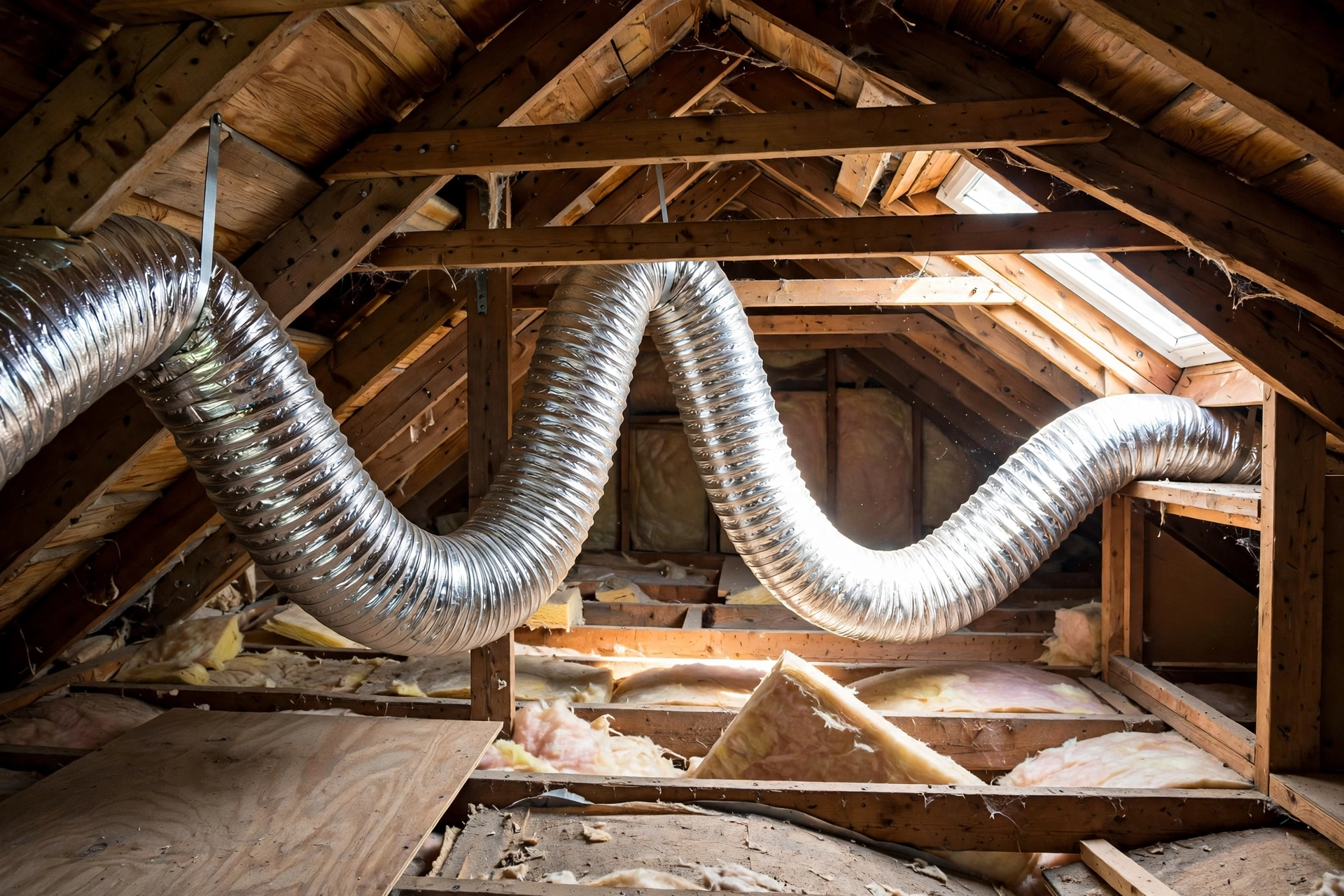
Hot and cold rooms usually start in the ducts, not the furnace. We find the leaks, restrictions, and balance problems and fix them at the source.
Leaky, crushed, or disconnected ducts waste heated air and leave rooms across your Manassas home uneven no matter how well the furnace runs. Manassas Furnace Pros inspects supply and return ductwork, plenums, and zone dampers in Prince William County homes, seals leaks, reconnects runs, and restores balanced airflow. If some rooms never warm up while others overheat, call (703) 962-7410 to schedule a ductwork assessment and repair visit today for your home.
Duct systems age quietly behind walls, above ceilings, and under floors, and their problems show up as comfort complaints rather than obvious failures. Joints separate as homes settle, flexible runs get crushed by stored items in attics, tape from past work dries out, and connections at the plenum loosen. Each gap leaks heated air into spaces you do not live in, so the furnace runs longer while the room that duct serves stays stubbornly cool through Manassas winters. Duct condition also influences furnace health itself, because a blower fighting leaks and restrictions works harder and the cabinet runs hotter than designed. Repairing ducts is therefore partly comfort work and partly equipment protection. Manassas homeowners often notice shorter, calmer furnace cycles after major leaks are sealed, alongside the warmer rooms they originally called about in the first place.
Our assessment starts with the rooms that bother you, then traces their supply runs back toward the furnace as far as access allows. We check the plenum and trunk connections, look for disconnected or damaged flexible duct, inspect return paths, and note where insulation has fallen away. Airflow at registers is compared room to room, which often reveals the pattern clearly. You get a map of what was found, in plain terms, before repairs begin. Older homes near the historic core may carry ductwork added in stages over decades, with materials and sizing changing from one section to the next. That patchwork is normal and workable once its weak points are mapped. We prioritize the junctions between eras of the system, where mismatched connections most often separate and leak heated air into hidden spaces.
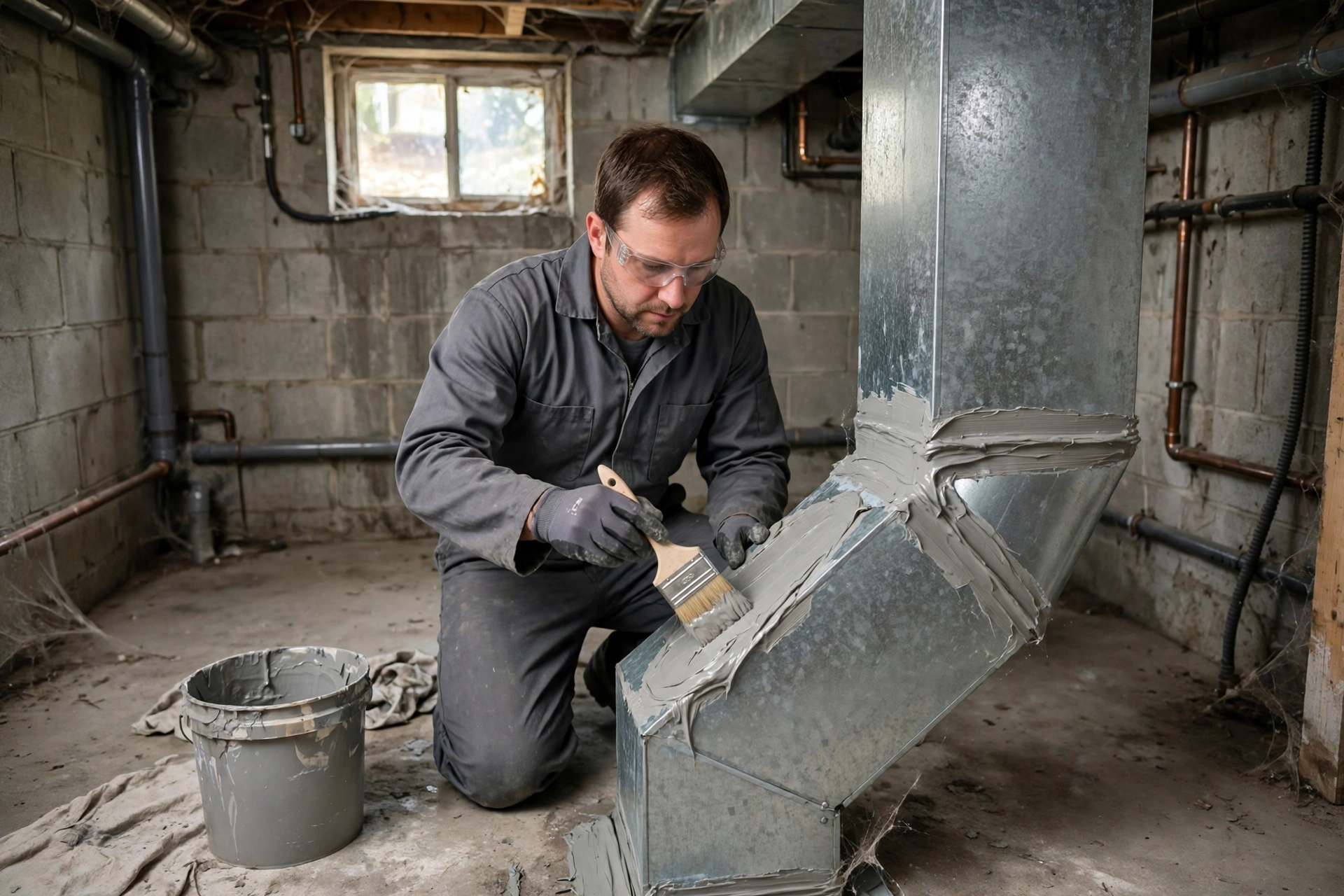
Effective duct repair uses proper materials, not the cloth tape its name suggests, which fails quickly with heat. Joints are sealed with mastic or approved metal tape, connections are mechanically secured, and damaged sections of flexible duct are replaced and supported so they cannot sag or kink again. Plenum connections receive particular attention, because a leak at the start of the system robs every register downstream in your Prince William County home at once. Insulation on repaired ducts in attics and crawl spaces is replaced where it was damaged or missing, because a sealed but bare duct still sheds heat on its way to the room. That is especially true for long runs crossing cold ventilated spaces in Northern Virginia winters. Sealing plus insulation together deliver the full benefit of the repair visit.
Return side repairs matter as much as supply side work. A return that draws from a wall cavity instead of the grille, or a return duct that has separated in a crawl space, starves the blower and unbalances the whole system. We correct what access allows, rehang loose runs, and replace missing insulation on ducts in unconditioned spaces. After repairs, register airflow is rechecked so the improvement is verified rather than assumed from the work performed. Wildlife and storage accidents cause a surprising share of duct damage in accessible attics and crawl spaces, from crushed flex runs to sections pulled loose at boots. We point out evidence of either so you can address the cause, whether that means a pest entry or simply moving storage off a vulnerable run near the attic hatch at home.
Some uneven heating is a distribution problem rather than a leak problem. Homes with zone systems rely on zone dampers to direct air between floors or wings, and a damper stuck closed or a failed damper motor leaves its whole zone without heat while the rest of the house is comfortable. We test damper operation, controls, and the bypass arrangement where fitted, and repair or replace failed components so zoning works as designed again. Return grilles deserve a place on the repair list when they whistle, pull weakly, or sit behind furniture that never moves. A starved return makes every supply in the home underperform, no matter how well sealed they are. Clearing and correcting return paths is quiet, unglamorous work that frequently changes how the whole house feels within a single heating cycle.
In single zone Manassas homes, balancing can still help. Adjusting dampers at branch takeoffs, correcting a return shortage in a closed door bedroom, or addressing one badly undersized run can even out temperatures noticeably. We are straightforward about limits, since duct systems built into finished homes cannot always be redesigned. The work focuses on the highest impact corrections first, verified by temperature and airflow checks in the rooms that started the conversation. After repairs, we recommend living with the system through a few heating cycles before judging rooms that lagged for years, since temperatures need time to stabilize in walls and furnishings. Note the change honestly over a day or two. If a room still trails, the record of what was done helps target the next most useful correction at your home.
Uneven rooms usually trace back to air delivery rather than the furnace itself. Long duct runs lose heat and pressure on the way, especially through cold attics or crawl spaces, and rooms at the far end feel it first. A leak or partial disconnection on that run makes the difference dramatic, while nearby rooms served by short runs stay comfortable. Start the cold room investigation at the register itself: is air arriving, and is it warm after several minutes of furnace run time. Cool or absent air tells a different story than warm but weak air.
Room features add to the gap. Large windows, exterior walls on several sides, and rooms above unheated garages lose heat faster than interior rooms. Closed doors without a clear return path trap air and reduce flow further. In many Manassas homes the cause is a stack of small factors rather than one dramatic duct failure hiding somewhere. Doors matter more than most people expect, since a bedroom door closed against carpet can seal a room whose only return sits in the hallway. Pressure then limits supply air entering at all. Undercutting a door or adding a transfer path can transform such rooms, sometimes more cheaply than any work at the furnace itself.
A duct assessment separates these causes with airflow readings and inspection, then targets repairs where they will actually change the room. Sealing, reconnecting, insulating, or rebalancing as needed beats guessing. Call (703) 962-7410 and tell us which rooms bother you most, because that pattern guides the inspection. Balancing is a process of measurement and adjustment rather than a single visit guarantee, particularly in two story Manassas homes where stack effect shifts air between floors seasonally. Small damper changes, verified over days, outperform dramatic ones. We set a sensible starting balance and explain how to report what changes through the following week.
The honest answer is that it varies widely with where the ducts run and how they failed. Ducts inside conditioned space lose little, because leaked air still ends up in the home. Ducts in vented attics, crawl spaces, and garages are different, where every gap sends heated air outside the living envelope and pulls cold replacement air in through cracks elsewhere in the house. Any honest duct conversation should separate what was measured from what was estimated, because hidden runs force some judgment calls in finished homes. We label findings accordingly during the assessment summary.
The signs of meaningful loss are practical rather than numerical. The furnace runs long cycles, dust gathers quickly near registers, rooms served by attic runs never quite arrive, and the spaces the ducts pass through feel oddly warm. Those clues, paired with inspection findings like separated joints at the plenum, tell us where sealing and repair will pay back in comfort. Focusing repair spending on the largest losses first also keeps the project proportionate, since not every minor joint weep justifies immediate work. A prioritized list lets you stage improvements sensibly over time.
Repair priority follows impact, starting at the plenum and trunk, then the longest and most exposed runs. After sealing, we recheck airflow and room response during a heating cycle. Prince William County homeowners usually feel the difference first in the room that started the complaint, which is exactly where it should show. Keep a note of which rooms improved and which did not after repairs settle in, and share it at your next furnace maintenance visit. Duct systems and furnaces are serviced as one system in practice, whatever the invoice headings say.
Why rooms drift hot and cold, answered at the duct level.
Describe what your furnace is doing and we will point you to the right next step.
Call (703) 962-7410Clues include rooms that never reach temperature, long furnace run times, dust streaks near duct joints, and warm air felt in a crawl space or attic. Inspection confirms it by checking connections, the plenum, and accessible runs, and comparing airflow between registers across the home.
Much of it can, because the highest impact leaks are usually at accessible points like the plenum, trunk joints, attic runs, and crawl space connections. Ducts fully buried in finished walls are harder to reach. We focus first on accessible repairs, which often deliver most of the improvement.
The plenum is the box attached to the furnace where all supply ducts begin, so it handles the full volume and pressure of heated air. Its joints and takeoffs are common leak points, and a leak there affects every room.
That room loses heat through the floor to the unheated garage, often has more exterior wall exposure, and is frequently served by a long duct run. The combination is common in Manassas floor plans.
Yes, because the blower can only deliver the air it receives. Undersized, blocked, or disconnected returns starve the system, raise noise, and unbalance room temperatures. Closed doors worsen it in rooms without return grilles. A good duct assessment always checks the return path alongside the supplies.
No heat tonight? We find the failed part and get the heat back on, around the clock.
Ignition, burner, and gas control problems found by sequence testing and fixed.
Heat strips, sequencers, and air handler faults diagnosed and repaired.
A full seasonal tune-up that keeps heat steady and catches wear early.
If one floor bakes while another freezes, the ducts are talking. We listen and fix.
Call (703) 962-7410