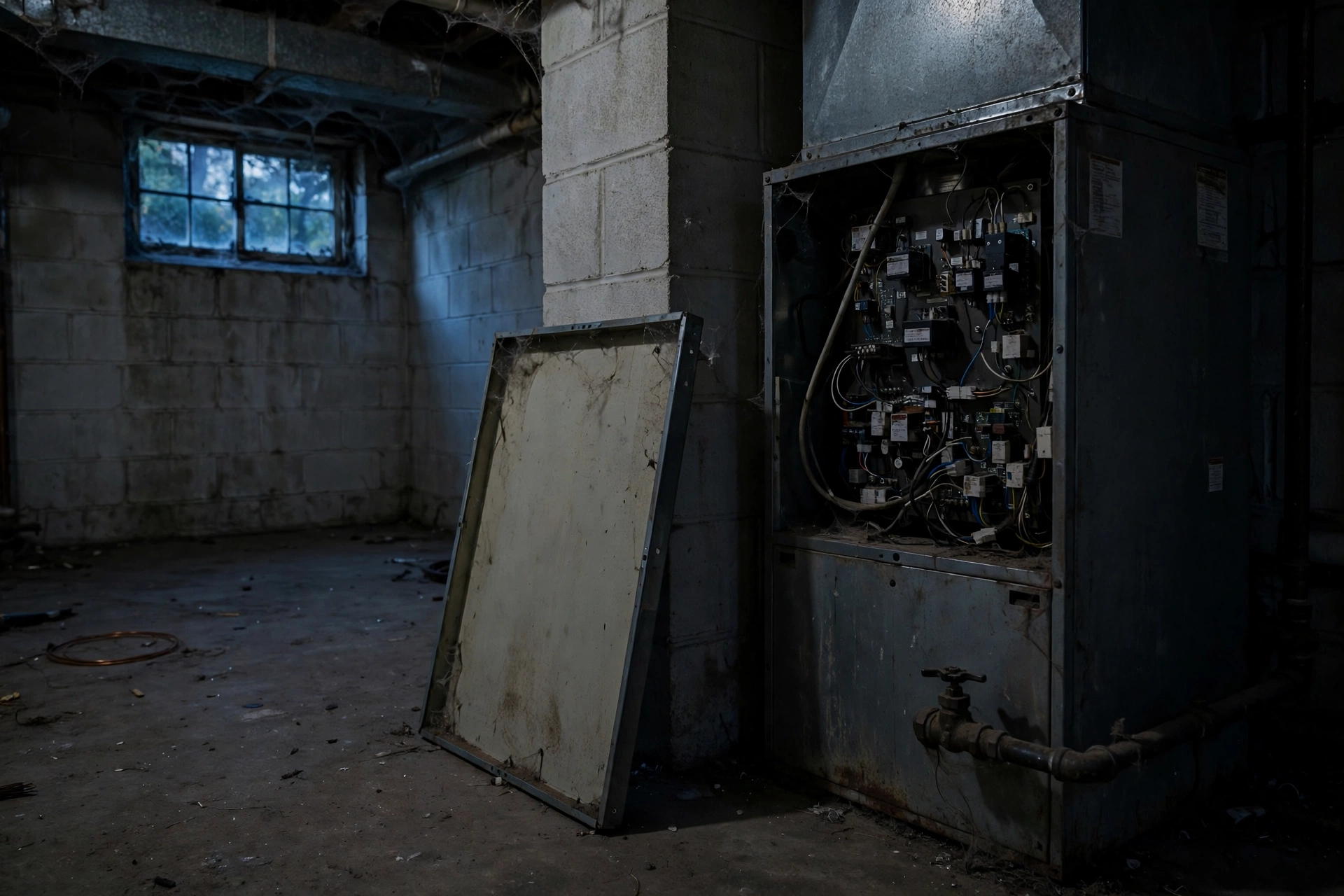
You raise the thermostat and nothing answers: no inducer hum, no ignition clicks, no blower. A furnace that will not start has failed at one of a handful of checkpoints, and the silence itself is a clue.
A furnace that will not turn on in Manassas has usually lost its call for heat, its power, or one step of its startup sequence. Dead thermostat batteries, a tripped breaker, a flipped furnace switch, a clogged condensate float, and failed igniters account for most silent furnaces. Work the safe checks below, and if the system stays silent, call (703) 962-7410 and tell us exactly what does and does not happen when you call for heat.
Every start begins with power, and the power chain has more links than most homeowners realize. The thermostat needs its own batteries or board power. The breaker in the main panel feeds the furnace circuit. A service switch, which looks like an ordinary light switch near the unit, cuts power for maintenance and gets bumped off by stored boxes more often than anyone admits. Even the cabinet door matters: a panel left slightly unseated after a filter change holds a door switch open and the furnace sits dead until the panel seats fully.
If power is present, the next suspect is the call for heat itself. A thermostat with a failed sensor, a broken control wire in the wall, or a programmable schedule holding an unexpected setback can leave a healthy furnace waiting for instructions that never arrive. The furnace is not broken in these cases; it is obediently doing nothing. Testing the call at the furnace terminals separates wall problems from furnace problems in minutes, which is why we always start diagnosis at that boundary instead of guessing at parts.
When power and the call both check out, the startup sequence itself is stalling. A seized inducer motor cannot start the draft the pressure switch needs to see. A blocked flue or a snow covered vent termination on a high efficiency model holds that same switch open. High efficiency furnaces add one more gatekeeper: a condensate float switch that stops the system when drained water backs up. Each of these guards exists for safety, and each one produces the same homeowner experience: complete silence where a start should be.
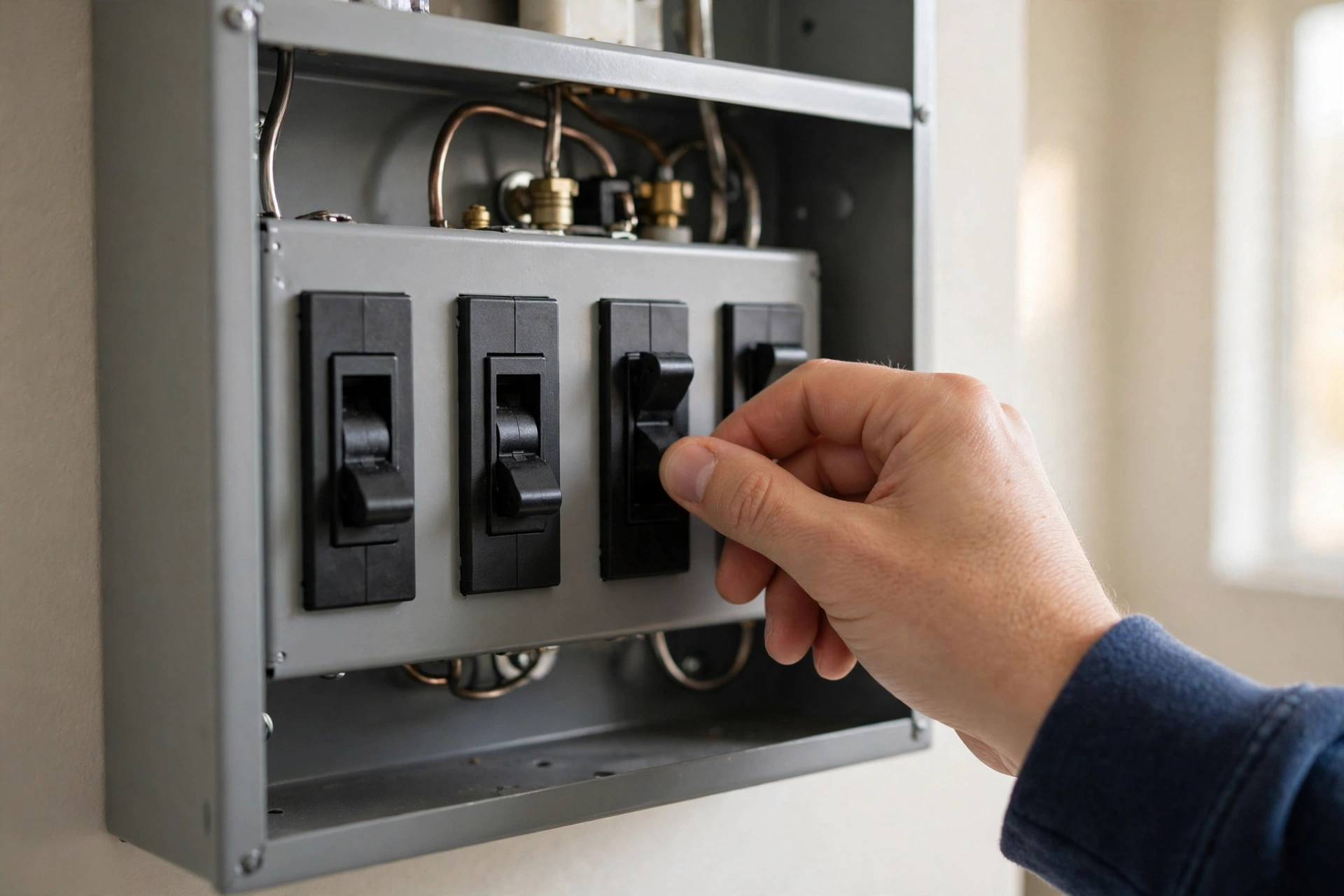
A silent furnace rewards a calm, ordered look at the simple links first. These checks are safe, cost nothing, and solve a surprising share of no start calls.
One reset is a check; a pattern of resets is a warning. Do not open sealed compartments, bypass safety switches, or touch gas piping while troubleshooting a silent furnace. If you smell gas, leave the house and call your gas provider or emergency services from outside. Electricity questions end at the breaker panel: anything beyond it belongs to a technician.
A silent furnace is an emergency whenever the house is losing heat in freezing weather, and it moves to the front of the line when young children, elderly family members, or medical needs are part of the household. If a carbon monoxide detector sounds, or anyone in the home feels dizzy or nauseated, leave first and call emergency services, then call us at (703) 962-7410 once everyone is outside and safe.
Diagnosis follows the same chain your checks did, with instruments at each link. We test for the call for heat at the control board terminals, verify power through the switch, breaker, transformer, and board fuse, then read any fault code the board has stored in its flashing light. That code, captured before anything is reset, often names the exact step where the sequence stopped, whether it was the pressure switch, the igniter circuit, or a limit that never closed again.
Where the repair lands depends on which link failed. Wall side faults go to thermostat repair, from dead displays to wiring that lost its connection. Combustion side stalls, like inducer and ignition failures, are handled as gas furnace repair. And a furnace that is silent on a freezing night is routed as emergency furnace repair from the moment you call, not after a diagnostic queue.
A repaired start is proven, not assumed. We run the furnace through several complete starts in a row, because intermittent faults love to hide after a single lucky ignition. You hear what a healthy sequence sounds like, see the part that failed, and get the findings in writing, including anything we noticed that may matter later in the season.
Answers for the moment the thermostat stops getting a response.
Describe what your furnace is doing and we will point you to the right next step.
Call (703) 962-7410A single click usually means the control board received the call for heat and tried to begin, then a guard stopped it: most often the pressure switch never proved draft, or the inducer failed to spin. The board aborts for safety and waits. That pattern narrows the search to the venting and inducer end of the sequence.
Yes, completely. A gas furnace burns fuel, but everything that manages the burn, from the control board and inducer to the igniter and blower, runs on electricity. Lose the circuit and the furnace cannot start, sequence, or prove flame, no matter how healthy the gas side is.
A dark board usually means power never arrived: a blown board fuse, an open door switch, a failed transformer, or a tripped breaker upstream. It can also mean the board itself has failed. Testing voltage step by step from the panel to the board finds which link in that chain went quiet.
Yes. Gas supplies the heat, but electricity runs the thermostat circuit, inducer motor, ignition, safety controls, and the blower that delivers warm air to the rooms. That is why a power outage stops a gas furnace cold, and why generator sizing conversations always include the furnace circuit.
Outages and the surges around them can blow the small fuse on the control board, trip the furnace breaker, or leave a thermostat with drained batteries and lost settings. Start with the checks on this page; if the system stays silent, the board fuse and transformer are the next places a technician will look.
It starts and runs, yet the vents never warm. A different fault family entirely.
A start accompanied by a sharp burning smell needs the safety checks first.
Dead displays, wrong readings, and calls for heat that never reach the furnace.
A silent furnace on a freezing night is routed first, around the clock.
A furnace that will not start is telling us where to look. Call and describe the silence in detail.
Call (703) 962-7410