Start With The Thermostat Setting
Begin at the thermostat, because a furnace that never gets the signal to run can look completely dead. Confirm the system is set to heat, not cool or off, and raise the temperature a few degrees above the current room reading. Give the furnace a few minutes to respond, since many controls run a short start up sequence before the burners and blower come on.
If nothing happens, check whether the thermostat screen is blank or dim. A blank screen can point to batteries, a tripped safety switch, or a control power issue rather than a failed furnace. Note what you see, including any error message or blinking light, before you change anything else. That simple record helps a technician in Manassas start in the right place instead of repeating steps you already tried on a cold morning. Also confirm that nobody set a temporary hold or a vacation schedule earlier in the week, because a forgotten hold can keep the furnace from responding even when every part of the heating system itself is working exactly as it should.
Check The Furnace Power Switch
Most furnaces have a power switch that looks like an ordinary light switch, usually on or near the unit, on a nearby wall, or at the top of the basement stairs. It is easy to bump during storage, cleaning, or a trip to move boxes, and family members sometimes turn it off thinking it controls a light. Confirm the switch is fully in the on position.
Also look for a separate switch or pull disconnect on the unit itself on some older installations. If the switch was off, turn it on and wait through a full start up attempt. Listen for the inducer motor, a clicking ignition sound, and then the blower. If the switch was already on, leave it alone and move to the breaker. Repeatedly flipping power on and off will not fix a furnace that is locking out for a safety reason. If your furnace shares a closet with a water heater or storage, label the switch once you find it, so the next person who reaches for a light does not shut the heat off again by mistake in the middle of winter.
Look At The Breaker And Panel
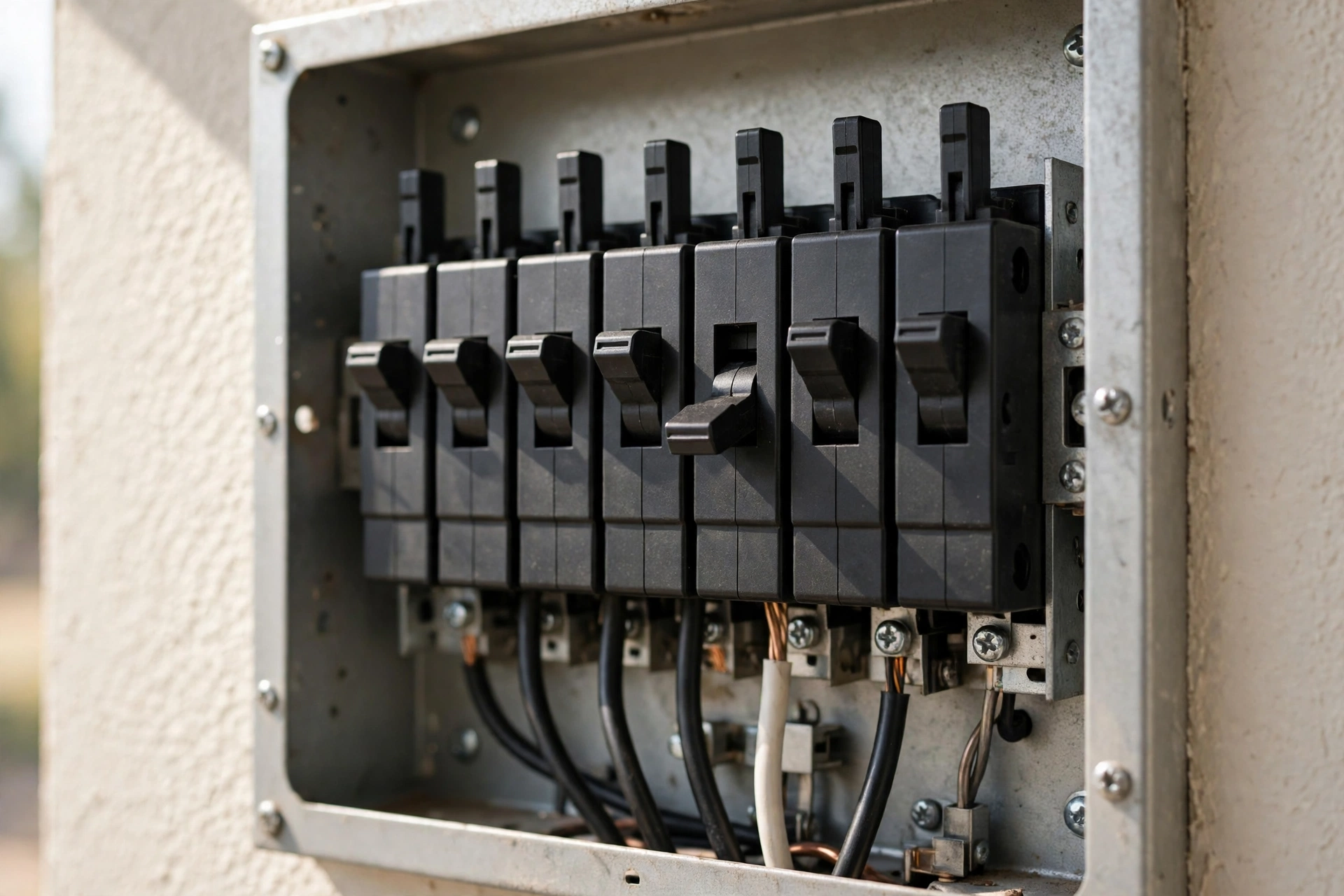
Next, find your electrical panel and look for the breaker marked for the furnace or air handler. A tripped breaker often sits halfway between on and off, so it can be easy to miss at a quick glance. If you find one tripped, switch it fully off, then back on, and watch whether the furnace tries to start again.
A breaker that trips once after a storm or outage is worth noting. A breaker that trips again right away is a warning to stop resetting it. Repeated trips can point to a motor drawing too much power, a short, or another electrical fault that needs testing rather than guesswork. Leave the breaker off in that case, keep the area around the furnace clear, and write down when it tripped and what the furnace was doing at the time. Take a phone photo of the panel labels while you are there, because knowing exactly which breaker serves the furnace saves real time on the next outage and helps you describe the setup clearly if you do call for service.
Pull The Filter And Check Airflow
A clogged filter can stop a furnace from starting or cause it to shut down soon after it lights. Slide the filter out and hold it up to a light. If you cannot see light through it, or the surface is matted with dust and pet hair, replace it with the correct size and note the direction arrows on the frame before you slide the new one in.
While you are there, walk through the house and confirm supply vents are open and not blocked by rugs, furniture, or storage bins. Closed vents in several rooms raise pressure in the duct system and strain the blower. In Manassas homes with finished basements, vents are often shut in summer and forgotten by the first cold snap. Opening them and fitting a clean filter gives the furnace the airflow it needs for a fair test. Keep the old filter until the new one is in place, so you can compare sizes side by side and be certain the replacement matches before the packaging and the receipt disappear into the recycling bin for the week.
Know When To Stop Checking
There is a clear point where homeowner checks should end. Stop if you smell gas, see scorch marks, hear loud repeated banging, or find water pooled around the unit. Stop if the furnace starts and stops in short bursts, if the breaker trips a second time, or if an error code keeps returning after a single reset through the thermostat.
Those signs point past settings and filters, toward ignition parts, safety controls, motors, or the heat exchanger, and those need instruments and a careful inspection. Leave the system off, keep people and pets out of the utility area if you suspect gas, and call from another room. For Manassas homeowners, a short, accurate description of what you checked, what changed, and what the furnace did next is the most useful thing you can hand to the technician who takes the call. If children or older relatives are in the home, add blankets and close off the coldest rooms while you wait, and check that space heaters, if you use them at all, stay clear of bedding, curtains, and foot traffic.
Questions About Furnace Won't Start
Should I reset my furnace more than once if it will not start?
Try one reset through the thermostat after your basic checks. Repeated resets can mask a safety lockout and stress ignition parts. If the furnace fails again in the same way, leave it off and have the cause tested instead of cycling power again and again.
Can a dirty filter really keep a furnace from starting?
Yes. A badly clogged filter restricts airflow, which can overheat the furnace and trip a limit switch that stops the cycle. Replacing the filter and opening blocked vents is a simple test. If the shutdown continues with a clean filter, the problem sits elsewhere in the system.
What should I tell the technician about my checks?
Mention the thermostat setting, whether the power switch was on, whether a breaker had tripped, and the condition of the filter. Add any sounds, smells, or blinking light patterns you noticed. That short history saves diagnostic time and helps the visit start with the most likely causes first.
Is it safe to open my furnace cabinet to look inside?
You can safely check the filter and the outside switches. Leave sealed panels, wiring, gas parts, and burners alone. Those areas hold electrical and fuel components that need proper tools. If your checks point inside the cabinet, that is the right moment to stop and book a repair visit.